
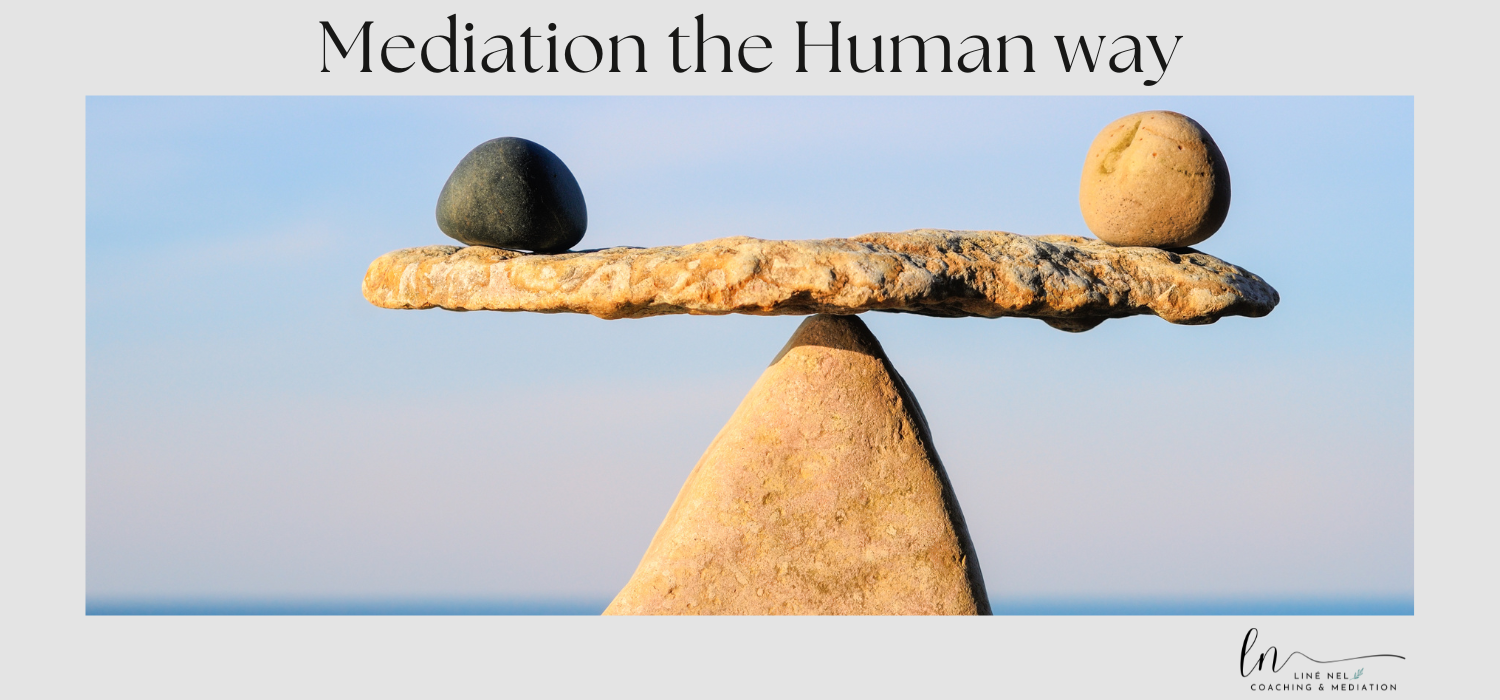
Calm resolution within clear legal boundaries
Mediation the Human Way: Resolving Conflict Within Legal Boundaries
Conflict is rarely just about facts, documents, or legal rights.
It is about people grappling with fear, loss, anger, uncertainty, and change.
As a mediator, my role is not to decide who is right or wrong, nor to instruct parties on what they should do. My role is to create a structured, neutral space where difficult conversations can happen safely, respectfully, and productively - within clear legal and ethical boundaries.
A Human Process, Anchored in Law
Court-annexed mediation operates within a defined legal framework. Confidentiality, neutrality, informed consent, and procedural fairness are non-negotiable. These boundaries protect both the integrity of the process and the people involved in it.
Within this framework, however, mediation remains fundamentally human.
I trust the mediation process because it honors people’s capacity to participate meaningfully in solving their own disputes. Mediation works best when parties feel heard, understood, and respected - even when they fundamentally disagree.
Guiding Without Instructing
Effective mediation is not about persuasion or pressure.
I guide the process without directing outcomes. I help parties:
- clarify the real issues beneath the legal positions,
- understand each other’s concerns and priorities,
- explore options and consequences calmly and realistically,
- and make decisions based on informed, voluntary choice.
Settlement reached through understanding is far more durable than settlement reached through pressure.
Supporting Without Judgement
Conflict brings out strong emotion. That is not a failure of the parties - it is a natural human response.
My approach recognizes emotion without allowing it to derail the process. I do not judge, take sides, or align with any narrative. Instead, I focus on:
- creating emotional safety,
- maintaining balance and neutrality,
- and helping parties move from reactivity to clarity.
When people feel supported but not steered, they are far better able to engage constructively with both the issues and each other.
Understanding Emotion as a Core Skill
My background in coaching and conflict resolution allows me to read the emotional dynamics in a room, not to manipulate them, but to manage them responsibly.
Unaddressed emotion often blocks resolution. Acknowledged emotion, handled with care, opens the door to movement.
This is particularly important in family and relationship-based disputes, where emotions run deep and the consequences of rushed or forced decisions can be significant.
Respecting Time, Consent, and Process
I do not rush outcomes for the sake of efficiency. Parties are encouraged to take the time they need to understand what they are agreeing to and to obtain advice where necessary.
This approach protects:
- party autonomy,
- the sustainability of the outcome,
- and the integrity of the mediation process itself.
A well-considered agreement is far less likely to unravel later.
My Commitment as a Mediator
My commitment is simple:
- to remain impartial,
- to respect legal boundaries,
- to protect confidentiality,
- and to help people move through conflict in a way that preserves dignity and promotes resolution.
Mediation, when done properly, is not about winning.
It is about finding workable solutions that allow people to move forward.
That is the heart of my work as a Mediator.
Guidance without Instructing and Supporting without Judgement - Liné Nel